
|
|
|
|
|
| June 30, 2026 |
|
Arctic sea ice at lowest recorded winter level as heat records smashed 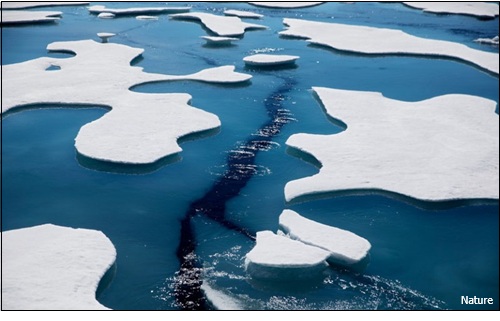
The North Pole’s sea ice has reached its lowest level for the winter season as increasing temperatures break records across the continents, according to the National Snow and Ice Data Center (NSIDC), based at the University of Colorado Boulder, on Thursday.
The center’s scientists “stress that the Arctic sea ice extent number is preliminary — weather conditions could change the annual maximum ice extent.” “This record low maximum gives a head start to the spring and summer melt season,” NSIDC senior research scientist Walt Meier said in the center’s report. “One or two record low years don’t necessarily mean much by themselves, but in the context of the significant downward trend that we’ve observed since 1979, it reinforces the dramatic change to Arctic sea ice throughout all seasons.” More sea ice would take in heat energy released by the sun and help keep temperatures across the globe in check. Less sea ice means more heat energy enters the oceans and affects wildlife like polar bears and seals that rely on the sea ice. The sea’s absorption of this heat from the sun will accelerate global heating, CNN reported. Jennifer Francis, a senior scientist at Woodwell Climate Research Center, told the outlet that the sea ice loss “is yet another symptom indicating the Earth’s climate is in big trouble.” Francis added that the gases released from burning fossil fuels trapped in the atmosphere is “warming the oceans, heating the air, melting the ice, and worsening weather extremes all around the world.” Meier told The Associated Press that the low sea ice level is “a climate change global warming signal.” The new reports come as temperatures broke March heat records across Mexico, Australia, Northern Africa and parts of northern Europe. The National Weather Service has tracked record-breaking temperatures for March in cities across the U.S., with the Southwest, Midwest and California seeing temperatures break past 90 and 100 degrees, resulting in the warmest March on record. Climatologist and weather historian Maximiliano Herrera listed 17 states that saw record temperatures this month in a post on X, with seven seeing temperatures over 100 degrees. He wrote in a separate post that the record temperatures were “extraordinary” and that they make up the “most extreme event in North American history” not seen in centuries. (Source: The Hill) Story Date: March 30, 2026
|
    |
