
|
|
|
|
|
| June 30, 2026 |
|
Oil prices jump after Trump demands others 'take the lead' on Hormuz Strait 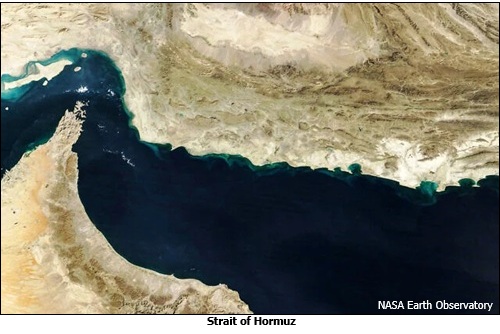
Oil prices rose sharply again Thursday and stock markets fell as President Donald Trump left the task of reopening the Strait of Hormuz to a group of U.S. allies.
Officials from more than 40 countries in Europe, Asia and the Middle East convened by videoconference Thursday to discuss how to clear the strait, a vital corridor for the world’s oil supply that has been choked off by the U.S.-Israeli war with Iran. The United States was not expected to join the meeting, which Britain organized. In his address to the nation on Wednesday night, Trump presented no plan to reopen the strait, suggesting it was not the United States’ problem. The president, who has railed against NATO allies for hesitating to get more involved in the war, said it was up to other countries to “take the lead in protecting the oil that they so desperately depend on.” Trump also defended the increasingly unpopular war, while saying the military campaign in the Middle East was “nearing completion.” Still, Trump’s comments rattled financial markets, sending the price of Brent crude, the global benchmark, up 8 percent to about $109 per barrel on Thursday morning. U.S. stock markets opened lower, with the S&P 500 index losing around 1.5 percent, the Nasdaq composite index sinking around 2 percent and the Dow Jones Industrial Average more than 1 percent lower. In Europe, gas prices rose, while stock markets generally traded around 1 percent lower. Since the U.S. and Israel launched an aerial barrage against Iran over a month ago, Tehran’s threats and counterattacks have largely halted traffic in the Strait of Hormuz, which connects the Persian Gulf to the open ocean, sending energy prices soaring. The dispute with Washington has widened cracks in the NATO alliance: Trump has chided Europeans for not offering unflinching support for the war or joining it more directly by deploying ships to the strait. The Thursday meeting follows mounting pressure from the Trump administration, which has suggested the U.S. could pull support for NATO and for Ukraine in its war against Russia if European leaders do not acquiesce to Trump’s demands. The president said this week that he was considering withdrawing from the U.S.-led alliance, which has been a cornerstone of American foreign and military policy in Europe for about eight decades. Responding to questions about Trump’s threats, French President Emmanuel Macron warned Thursday that they weaken the alliance. “If we cast doubt on the commitment every day, we strip it of substance,” he said. Macron also dismissed the idea of a military operation to force open the Strait of Hormuz, calling instead for a ceasefire and a “clear framework” to resume the flow of oil through the narrow waterway. During Thursday’s videoconference, British Foreign Secretary Yvette Cooper accused Iran of trying to “hijack an international shipping route” and hit “global economic security.” She said maritime traffic through the strait had shrunk from about 150 vessels per day to five, with some 20,000 seafarers trapped on about 2,000 ships. The call included officials from France, Germany, Italy, the United Arab Emirates, Australia, Canada and Japan. Cooper said that they had agreed to ramp up pressure on Tehran, including through the United Nations, to allow all ships through and that they would explore “economic and political measures” targeting Iran, such as more sanctions. Iranian officials have said the Strait of Hormuz is closed to “enemies of the nation.” (Source: The Washington Post) Story Date: April 3, 2026
|
    |
