
|
|
|
|
|
| June 30, 2026 |
|
White House budget would cut thousands of TSA jobs 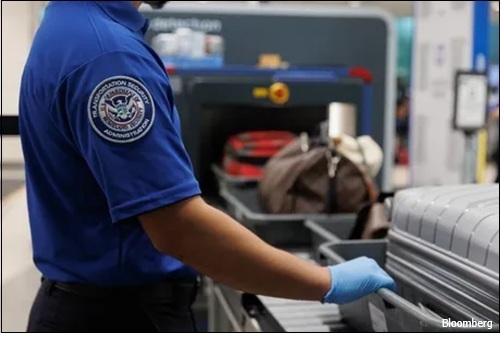
WASHINGTON - President Trump’s 2027 budget proposal would cut thousands of Transportation Security Administration (TSA) jobs in a push toward privatizing the agency founded in 2001 that is housed under the Department of Homeland Security (DHS).
Conservatives have long sought to outsource airport security, arguing that shifting screening to contractors would cut costs and improve operational efficiency. Critics — including labor groups and some Democrats — say private companies would prioritize profit over security, risking passengers’ safety and leading to significant job losses. The debate has taken on renewed urgency in recent weeks, after Congress failed to pass funding for the DHS, leaving TSA officers working without pay for weeks and straining airport operations nationwide. More than 500 officers resigned during the lapse, and thousands more skipped shifts each day, contributing to long security lines and flight delays. The administration is now proposing to expand the use of private screening through its latest budget request, touting the existing contractor-run program at nearly two dozen small airports around the country as a more flexible and cost-effective model that would shift screening away from a federal workforce. What’s in the budget The White House requested a TSA budget of $11.7 billion for fiscal 2027, including 53,199 positions and 50,398 full-time equivalents (FTEs), according to a DHS congressional justification report on the TSA budget request. That represents a reduction of 8,385 positions and 9,439 FTEs from the fiscal 2026 annualized continuing resolution. Among the thousands of jobs proposed to be cut are 2,462 transportation security officer (TSO) positions and 4,351 TSO FTEs. Under a section of the budget called “workforce reshaping,” another 1,347 positions and 511 FTEs would be cut. At the same time, the administration is proposing a significant expansion of privatized screening at specialized and smaller airports. Funding for the Screening Partnership Program (SPP), which allows private contractors to conduct screenings, would increase by $477.3 million — a move offset by a $529.3 million reduction in TSO personnel costs and benefits. Push for privatization The proposal builds on renewed interest in privatizing airport security that intensified during the recent government shutdown, when TSA staffing shortages led to hours-long security lines and widespread flight delays. The disruptions underscored the system’s reliance on congressional action to keep federal workers paid. Twenty airports across the country participate in SPP, which allows private contractors to conduct screenings under TSA oversight. Those airports largely avoided the kinds of disruptions seen elsewhere during the DHS shutdown, in part because their workers are paid through prefunded federal contracts. Union pushback to the effort The American Federation of Government Employees (AFGE), the union representing most TSA workers, has forcefully pushed back on the effort to privatize airport security, arguing the shift would make travelers less safe. “I would not personally want to fly if I knew the whole entire system was privatized because it’s just not safe for the American people,” said Johnny Jones, AFGE TSA Council 100 secretary treasurer and AFGE Local 1040 president, at a press conference last month. Jones characterized the push to privatize security as an effort to “put profit before people and security.” (Source: The Hill) Story Date: April 9, 2026
|
    |
