
|
|
|
|
|
| June 30, 2026 |
|
How microplastics are likely helping to heat up the planet 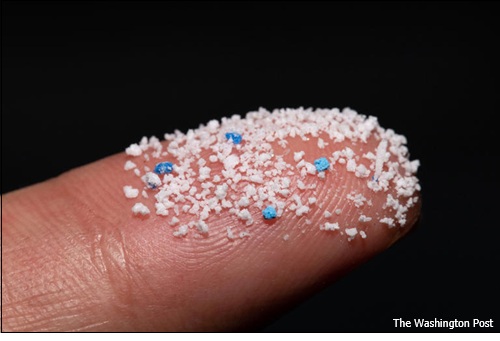
Microplastics lurk in nearly every corner of the globe. Scientists have found the tiny particles in rivers and lakes, in agricultural soil and in the oceans. They have infiltrated our food and water, cleaning products and cosmetics, even our own bodies.
But do they also play a role in hastening the warming of the planet? It’s a question researchers inch closer toward answering in a new study published Monday that finds these minuscule pieces of plastic — particularly ones of various colors — are contributing to heating the atmosphere. Drew Shindell, a Duke University earth science professor and co-author of the study in Nature Climate Change, said many questions remain about the precise impacts, but the new findings show that on the whole, microplastics in the atmosphere are likely absorbing more heat than they are reflecting. Microplastics are tiny particles — less than five millimeters in size, or smaller than a pencil eraser — that often originate from larger plastic waste. Nanoplastics are even smaller and can be a fraction of the width of a human hair. A large and growing body of research has analyzed their vast impact on wildlife, the environment and human health, but there has been less scrutiny about the role they might play in affecting the climate. To undertake their study, a group led by researchers at Fudan University in China examined how different colors and sizes of microplastics interact with light across the spectrum, while combining that information with simulations of how particles get dispersed in the air across the planet. “Black, yellow, blue and red [particles] absorb sunlight much more strongly than the white particles,” Yu Liu, a Fudan professor and study co-author, said in a call with reporters. In fact, the study details how black and colored particles showed “absorption levels nearly 75 times higher than pristine, non-pigmented plastics.” The scientists also found that different sizes of particles absorb light at different intensities — and that how they absorb light can change as they age. The authors estimate that microplastics suspended in the atmosphere could be contributing to global warming at about one-sixth the amount of black carbon, also known as soot, a pollutant generated largely from burning fossil fuels. If the latest estimates are right, Shindell said, microplastics might not be an enormous source of atmospheric warming, compared with massive contributors such as cars and trucks, belching industrial plants or even burping cows. “But not a trivial one, either,” he said. By his calculation, the effect of one year’s microplastic emissions globally is approximately equivalent to 200 coal-fired power plants running for that year. But that rough estimate does not factor the longer-term repercussions of microplastics decaying and persisting in the environment for decades to come. Whatever the exact impact, the topic deserves further study, the authors say, because current climate modeling does not account for any additional warming that these tiny particles might be causing. The countless shapes, sizes and colors of tiny plastic particles in the real world make it exceedingly hard to calculate how much sunlight they are absorbing. In addition, scientists continue to wrestle with how to accurately assess the quantity of microplastics in the atmosphere and their origins. (Source: the Washington Post) Story Date: May 5, 2026
|
    |
