
|
|
|
|
|
| June 30, 2026 |
|
US says Iran ceasefire in place after clashes over Hormuz 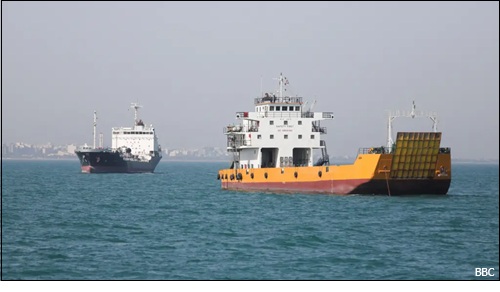
The US played down the prospect of a return to active war with Iran after a day of clashes involving ships in the Strait of Hormuz and missile strikes against the United Arab Emirates, while Iran’s president said American demands are “impossible.”
Attacks by Tehran on vessels in the Persian Gulf and the UAE didn’t constitute a breach of a ceasefire, General Dan Caine, the chairman of the Joint Chiefs of Staff, told reporters at the Pentagon on Tuesday. Speaking alongside him, Defense Secretary Pete Hegseth confirmed the truce that began just under a month ago is still in place. Violence erupted on Monday after President Donald Trump announced “Project Freedom,” which he described as a humanitarian effort to guide neutral ships stranded in the Gulf through Hormuz. At least two merchant vessels transited the waterway with US assistance in fending off attacks, while two American warships entered the Gulf. On Tuesday, President Donald Trump said he would pause a US-led effort to help stranded ships exit the Strait of Hormuz to see if an agreement with Iran to end the war could be finalized. The UAE said Tuesday it’s responding to missile and drone threats, having intercepted almost all of roughly 20 projectiles fired from Iran the previous day. Project Freedom is a defensive and temporary operation, Hegseth said, adding that the US naval blockade of Iranian ports remains in full effect. Both he and Caine reiterated that US forces are ready to resume combat operations if required, while calling on other nations to step in to help. “We see ‘Project Freedom’ as an attempt to break the logjam in the strait, which has cast a long shadow over the global economy,” said Becca Wasser, an analyst with Bloomberg Economics. “Still, it carries significant escalation risks, as the outbreak of fighting Monday illustrates.” More than 1,550 commercial vessels carrying some 22,000 sailors are currently trapped in the Persian Gulf, Caine said. Iran again warned all ships against trying to get through Hormuz without its permission. It hit a South Korean bulk carrier and attacked an empty tanker belonging to the UAE’s state oil firm, Abu Dhabi National Oil Company, on Monday. There were no reports of injuries on either ship. On Tuesday, Tehran announced a new protocol for vessels seeking to transit the waterway, requiring ships to receive an official email signaling approval, state-run Press TV reported. The developments came amid an impasse between Iran and the US, with the sides showing little sign of agreeing to a fresh round of peace talks soon. Tehran insists Washington must lift a naval blockade on its ports for that to happen. The US says the blockade is choking Iran’s oil exports and squeezing its economy, forcing it into concessions. “The problem is that while the US pursues a policy of maximum pressure against our country, it also expects the Islamic Republic of Iran to come to the negotiating table and ultimately submit to its unilateral demands — an equation that is impossible,” President Masoud Pezeshkian said in a call with Iraq’s prime minister-designate Ali al-Zaidi, according to the semi-official Fars News Agency. Oil declined on Tuesday, with Brent trading around 3.6% lower at under $111 a barrel. It jumped almost 6% on Monday. (Source: Bloomberg) Story Date: May 6, 2026
|
    |
