
|
|
|
|
|
| June 30, 2026 |
|
This year's Atlantic hurricane season could produce fewer big storms 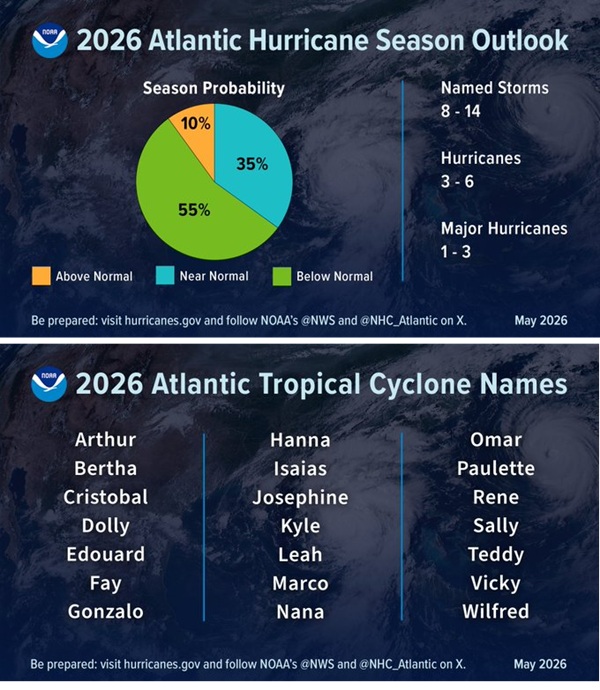
Weather forecasters in the US say that this year's Atlantic hurricane season is expected to be less active than normal, largely due to a developing El Niño.
NOAA (National Oceanic and Atmospheric Administration) has issued its forecast for the 2026 season and says there is a 55% chance of a below-average season, with between eight and 14 named storms of tropical storm strength or above. This would include three to six hurricanes, between one and three of which are expected to be major hurricanes - category three or stronger. The Atlantic hurricane season runs from 1 June to 30 November and would typically feature 14 named storms, seven hurricanes and three major hurricanes. High sea temperatures vs El Niño There are competing factors that will influence how active this hurricane season might be. On the one hand, sea surface temperatures in the Atlantic are expected to be higher than normal - which would typically support a more active year, as hurricanes draw their energy from warm ocean waters. However, balanced against that is the growing chance of a strong El Niño. This natural climatic event sees the usual flow of east-to-west trade winds across the Pacific slowing down or even reversing, with warm water pooling close to the Americas. This can drive powerful thunderstorms overhead which can in turn lead to increased vertical wind shear in the Caribbean and Atlantic - meaning strong winds high in the atmosphere can tear storms apart. Forecasters have calculated that the El Niño factor is likely to be strong enough to keep hurricane activity below average overall - but there are still big uncertainties. "It only takes one" Hurricanes can be deadly. They bring a range of severe weather impacts including destructive winds, torrential flooding rainfall, and storm surges which can inundate coastal areas. And forecasters warn that even in a below-average season, major hurricanes can still develop and cause devastation. NOAA's National Weather Service Director Ken Graham says "Although El Niño's impact in the Atlantic Basin can often suppress hurricane development, there is still uncertainty in how each season will unfold. "It only takes one storm to make for a very bad season." Forecasters cite the examples of Hurricane Betsy in 1965 and Hurricane Andrew in 1992, both devastating storms which occurred during below-average seasons. (Source: BBC News) Story Date: May 22, 2026
|
    |
