
|
|
|
|
|
| June 30, 2026 |
|
Immigration decline is reversing post-COVID population growth in these cities 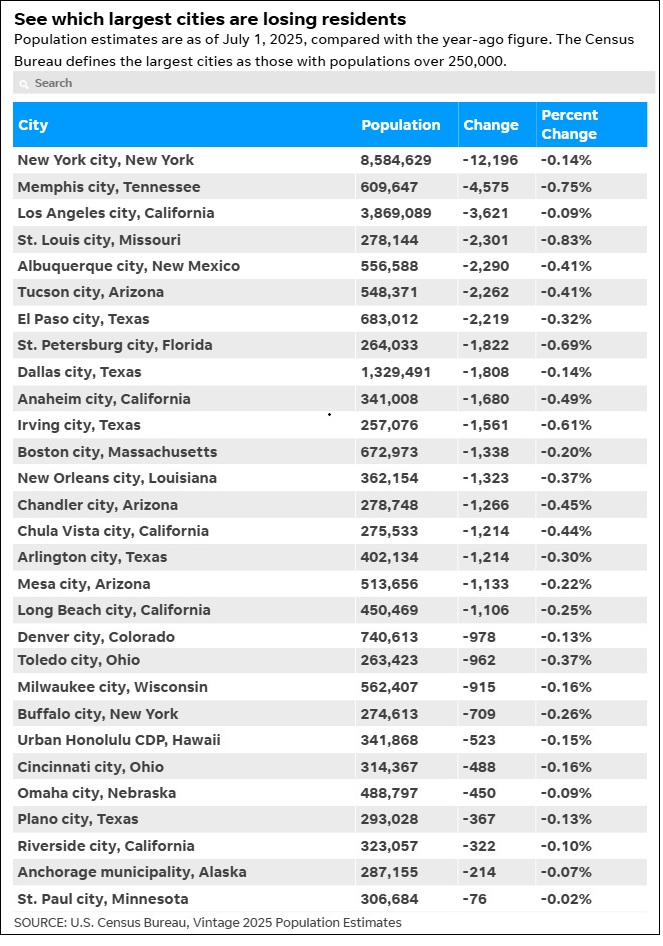
America’s largest cities were bouncing back from their post-pandemic population losses. But the latest Census Bureau data shows that the post-COVID rebound for many metropolises stalled or reversed in 2025.
Big cities lost population during the pandemic, with nearly half of the largest U.S. cities reporting fewer residents in 2022 than in 2020. By 2024, two-thirds of these cities had begun adding residents again. But in 2025, almost all of them saw that momentum fade, with many recording losses in residents again. Experts attributed much of it to one primary factor: a steep decline in net international migration. “Domestic migration is a kind of zero-sum. Some places lose numbers, some places gain them. But immigration is more broad-based across the country. That's why you can have much more of a pervasive decline," said William Frey, demographer with the Brookings Institution. The slowdown extends well beyond these struggling metros. The Census Bureau’s data, which estimates population changes between July 1, 2024, and July 1, 2025, showed that the U.S. population grew by 1.8 million people, or 0.5%, the slowest rate since the pandemic. The current tightened immigration policies have reduced the inflow of immigrants that many large cities have long depended on to offset domestic out-migration and aging populations. Frey added that all 56 major metro areas with populations over 1 million experienced declines in immigration. Beyond immigration trends, the high cost of living in big cities has pushed residents to move to the suburbs. The census data shows that population growth in midsize cities held relatively steady, and some midsize cities on the edge of metro areas grew faster than the metro itself. Immigrants play a key role in sustaining population growth in many large U.S. cities, according to Frey with Brookings. Without that inflow, cities that already rely on immigration to offset domestic out-migration may struggle to maintain growth in their total population, child population, and working-age population. “Immigrants not only contribute to the size of the population but also make it younger,” he said. “When immigration declines for long periods of time, that can affect the age structure and eventually the number of births, but it takes a few years for that to show up.” (Source: USA Today) Story Date: May 28, 2026
|
    |
