
|
|
|
|
|
| November 12, 2026 |
|
What Democrats can and can't do with their new power after taking Congress 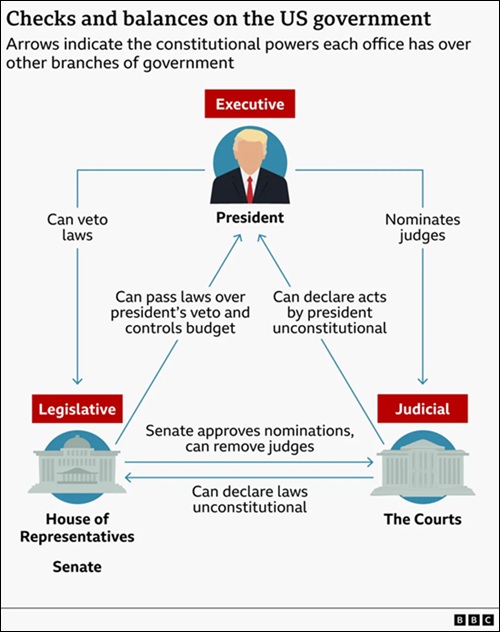
Election night was a fever dream for Democrats. In January, reality will set in. They had a reason to be giddy on Tuesday night: Next year, Democrats will take control of both chambers of Congress after a blowout victory.
After months of promises on the campaign trail — to investigate corruption; lower the costs of healthcare, groceries and petrol; and curtail the Iran war — they will now begin the much tougher process of putting plans into action. A shift in the balance of power in Washington doesn't necessarily mean Democrats will immediately get to start checking items off their legislative wish list. Democrats have Congress, but Republican President Donald Trump still has the power to reject legislation. What Democrats may be able to achieve Committees in both the US Senate and House have investigative powers, which they could use to delve into alleged conflicts of interest and other actions by the president and those close to him. The Senate also has the power to confirm or block the president's cabinet and judicial nominations. Should a US Supreme Court vacancy, for example, arise during Trump's term, Senate Democrats could use their new power to block a nomination - or force Trump to choose a more moderate candidate who garners bipartisan support. The House also has the power to impeach a president - the first step of Congress' process to remove an official from office. Democrats twice impeached Trump during his first term, though the US Senate eventually voted to acquit him in both cases. But because it takes a two-thirds majority in the US Senate — or 67 votes — convicting a president in an impeachment case likely will remain out of reach for Democrats. There's an active debate among Democrats about whether impeachment is a good idea. The first impeachment, in 2019, unleashed partisan rancor and allowed Trump to cast himself later as a victim of political persecution, which later helped build support for his second White House run. What Democrats may struggle to do Americans' frustration with Congress' productivity was palpable before the election. Only 14% of US registered voters approved of lawmakers' performance, an October Gallup poll suggested. But with a Republican in the White House and Democrats running Congress, Americans may face even more deadlock. "If you thought legislating was hard in the last Congress with unified Republican control, that will get much more complicated," said Casey Burgat, professor of legislative affairs at George Washington University. Democrats will be able to pass legislation through Congress with relative ease. Getting it enacted into law will be harder. A president must sign most legislation in order for it to become law. Trump has the power to reject legislation passed by Congress that he does not support, and Congress can only override him with a supermajority from both chambers - margins Democrats alone will not have despite their success on Tuesday. As his party lost Senate race after Senate race Tuesday night, Trump struck a conciliatory tone with the New York Times. "We'll work with the Democrats, and we'll, you know, look forward to working with them. We'll probably work something out," he said. But a few minutes later, Trump posted a picture on Truth Social of his red campaign hat with the word "VETO" emblazoned across the front. That Jekyll-and-Hyde approach to a Democratic Congress could become a theme. While opposition to Trump led to Democrats' success, lawmakers acknowledged Tuesday night, it might not be enough. On typically bipartisan issues – such as policies affecting affordability, regulating the AI industry, re-evaluating military funding for Israel and reining in the Iran War – talks could break down as lawmakers try to compromise. As they become the opposition heading into the 2028 presidential cycle, Republicans might not be in the mood to help Democrats achieve too many wins. Fissures also could erupt even among Democrats themselves, particularly on matters involving Israel, that may make party consensus difficult. A schism emerged in the Democratic Party during the midterms over continued US military funds for Israel. Then there's the matter of reining in Trump's foreign policy, which could be difficult, despite Democrats' majority. Even before the midterms, Congress saw bipartisan efforts to limit Trump's ability to continue the war with Iran. Though some of these measures passed one or both chambers, Congress has not been able to enforce them. Notably, both the House and the Senate passed a resolution in June to halt hostilities with Iran, which Trump could not veto but has essentially ignored. (Source: BBC News) Story Date: November 5, 2026
|
    |
